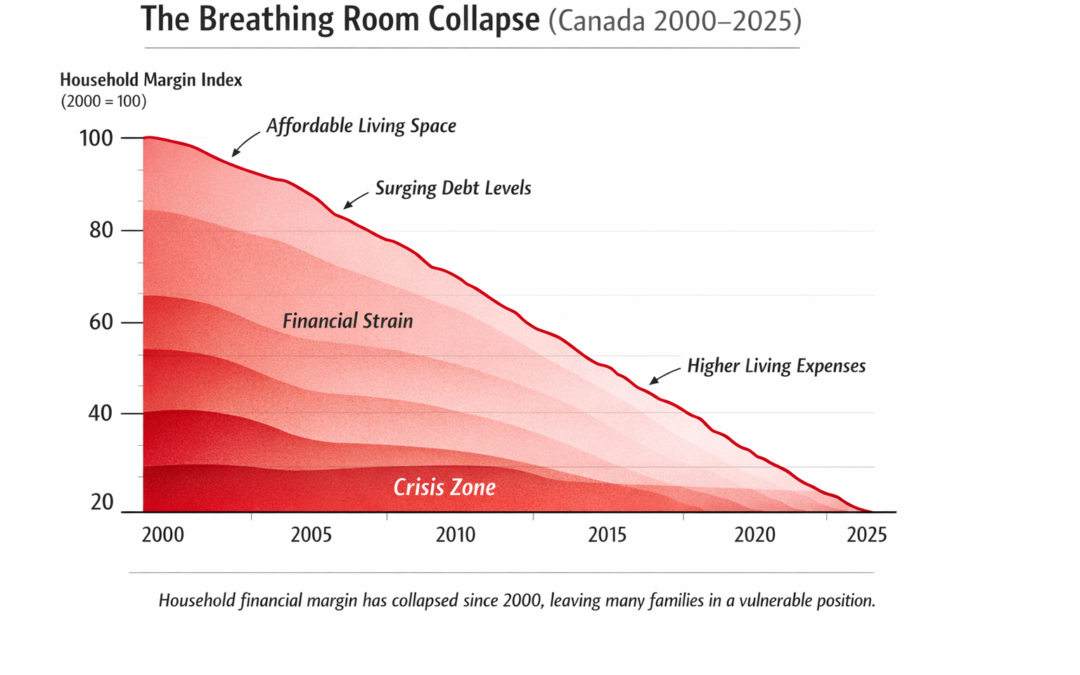
We’re losing room to breathe
We need a model that starts from a simpler premise: the economy should not be a machine people serve. It should be an infrastructure that protects their ability to live, plan, participate, and give room to breathe.

We need a model that starts from a simpler premise: the economy should not be a machine people serve. It should be an infrastructure that protects their ability to live, plan, participate, and give room to breathe.

The future of digital government is not a collection of better websites. It is a connected ecosystem of services that work together seamlessly.
When governments adopt whole-of-government product thinking, they stop delivering isolated solutions and start delivering coherent experiences.
That is how trust is rebuilt. That is how value compounds. That is how digital transformation becomes durable.

Public-sector digital products succeed when they improve real lives and not when they meet internal milestones.
When governments measure what truly matters, they stop optimizing for appearances and start optimizing for impact.
The most powerful tool in digital transformation is not technology. It is clarity and it begins with the right measures.

Modernizing legacy systems is not about erasing the past. It is about respecting it — while preparing for the future.
When legacy platforms are evolved with intention, public services gain resilience, adaptability, and longevity.
Transformation doesn’t come from starting over. It comes from moving forward — deliberately, incrementally, and with purpose.

Digital transformation succeeds only when it serves everyone, not just the easiest users.
When accessibility and inclusion are treated as product mandates, public services become more humane, more effective, and more trustworthy.
Equity is not an add-on. It is the measure of whether digital government truly works.