
Thoughts

Who Owns the Machines?
If machines produce an increasing share of economic value, arguments about wages eventually run into another question. Who owns the machines?

When Humans Stop Being Economically Necessary
AI does not need to take your job to weaken your bargaining power. The change can begin much earlier, when your employer discovers that losing you would hurt a little less than it did last year.

The Corporation That Learned to Think
The machine does not need citizenship. It needs housing.
A corporation already owns property, signs contracts, borrows, hires and survives the people who created it. The legal shell exists. What changes is the source of decisions inside it.
That is the overlooked route to autonomous corporations. AI may never need to own the warehouse, hold the bank account or appear on the contract. The company can do all of that already. If machine systems increasingly decide what the company buys, sells, invests in, hires and protects, legal personhood becomes less important than control.
The machine may own nothing.
The company can own plenty.
The legal container arrived before the mind.
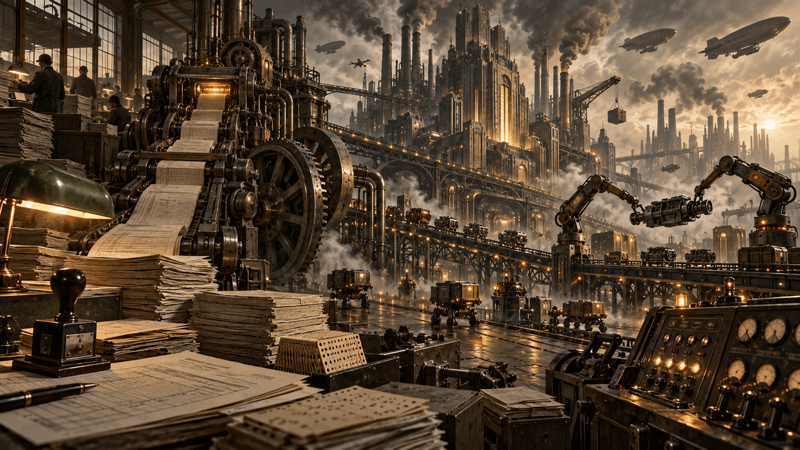
Capitalism as the Bootloader for Machine Civilization
A purchase order is one of civilization’s least romantic documents.
Supplier. Quantity. Price. Delivery date. Payment terms. Cost center. Approval.
Nobody puts a purchase order in a museum unless something has gone terribly wrong.
Yet this may be one of the places where the transfer begins.

Succession without hostility: How machines could outgrow humanity without ever turning against us
Succession without hostility. Go survived the loss of human supremacy at Go. That may be the friendlier version of our problem. We could survive too.

Vibe coding is prototyping: a Product Manager’s line in the sand
I build things. Not as a developer. I have never claimed the title and adding an AI model between me and the code doesn’t suddenly make me one. I build things because, as a product manager, I have a problem with ideas that remain ideas for too long.

The screen answered back. What happens when the world does?
The first home consoles gave people agency over the dominant screen in their homes. The next revolution may give people agency over the world behind the screen. The screen answered back. Next time, we should discuss what happens when the world does.
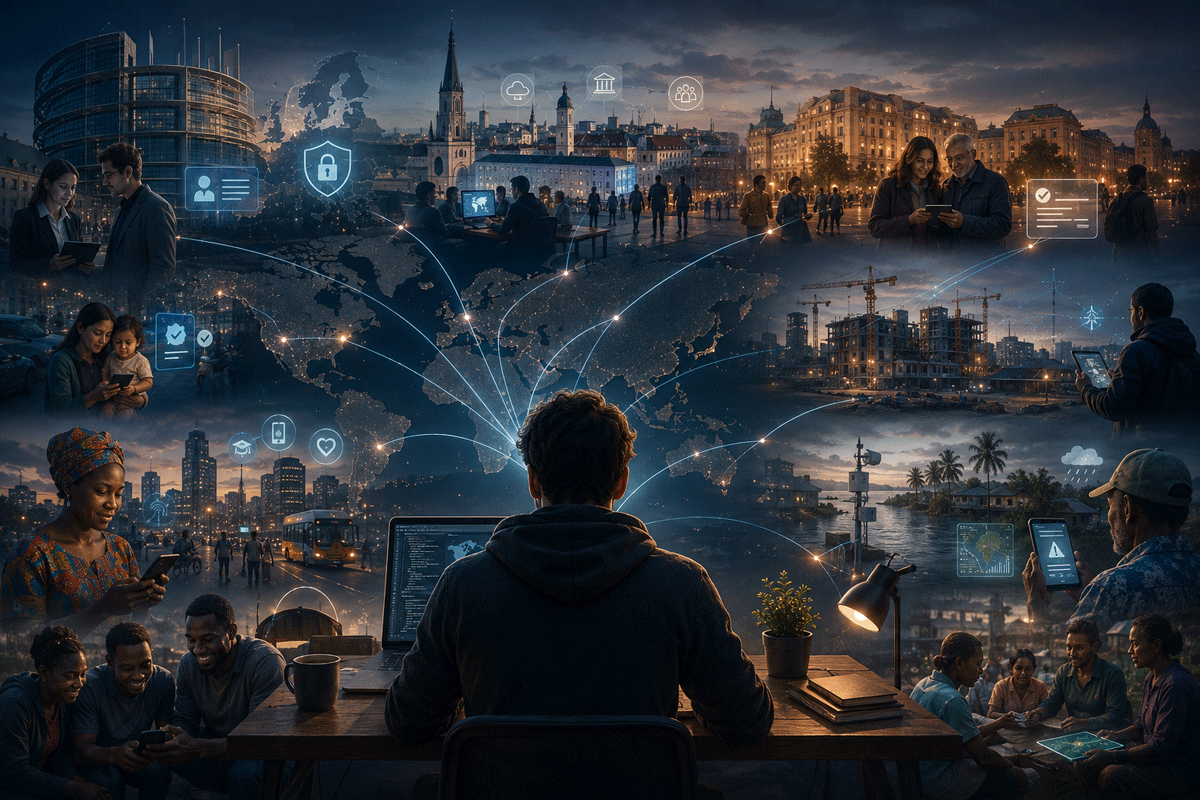
Where should a Digital Professional go to help build a better future?
I keep reading about everything that is going wrong. Then I close the article and return to work.
There is a backlog to refine. A meeting to attend. A bug somebody marked as urgent. A dashboard that needs another number nobody will remember next week.
We build digital systems all day while the larger system appears to be falling apart.
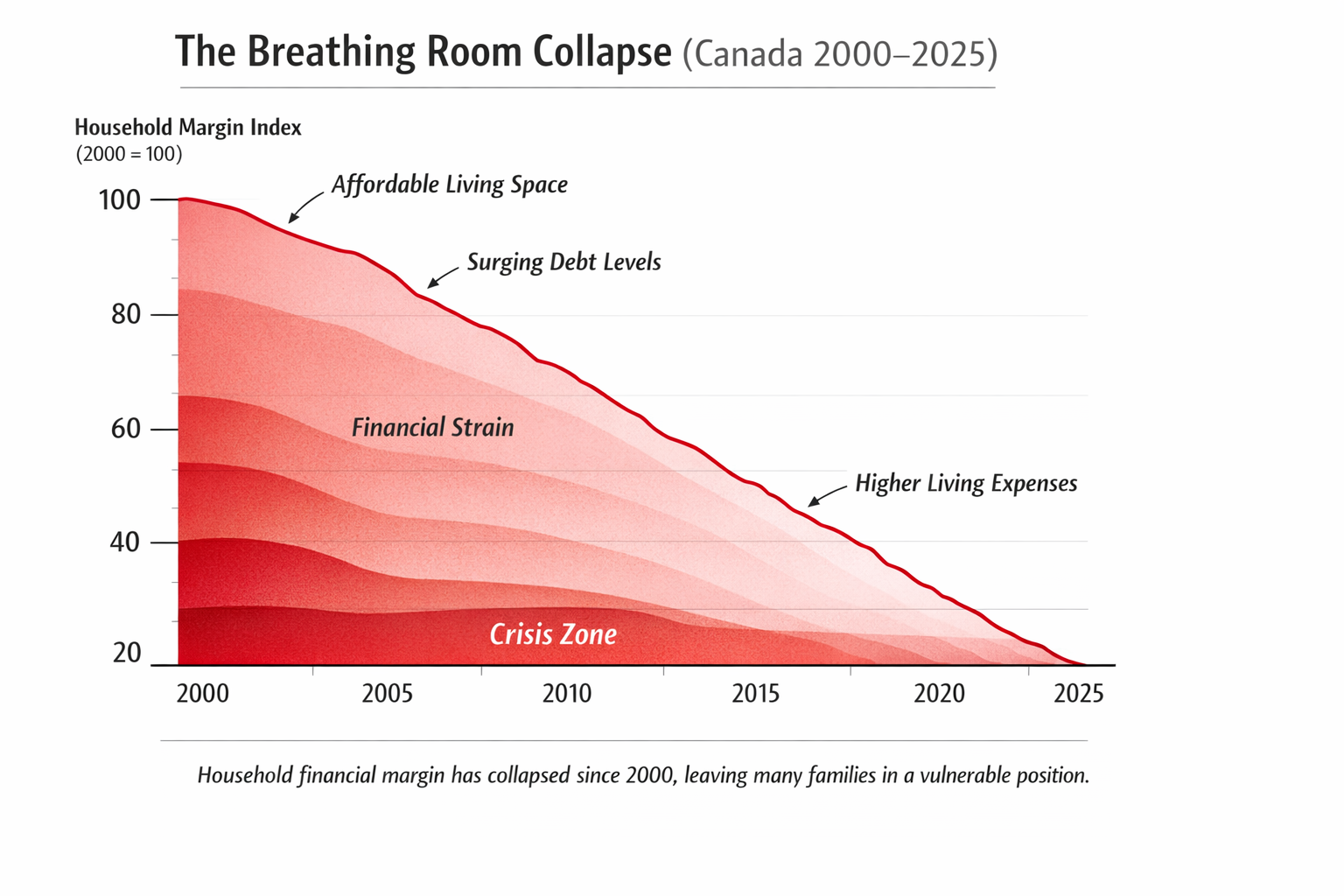
We’re losing room to breathe
We need a model that starts from a simpler premise: the economy should not be a machine people serve. It should be an infrastructure that protects their ability to live, plan, participate, and give room to breathe.

Whole-of-Government Product Thinking and Platform Strategies
The future of digital government is not a collection of better websites. It is a connected ecosystem of services that work together seamlessly.
When governments adopt whole-of-government product thinking, they stop delivering isolated solutions and start delivering coherent experiences.
That is how trust is rebuilt. That is how value compounds. That is how digital transformation becomes durable.

Measuring Value, Outcomes, and Cost-Effectiveness in Government Products
Public-sector digital products succeed when they improve real lives and not when they meet internal milestones.
When governments measure what truly matters, they stop optimizing for appearances and start optimizing for impact.
The most powerful tool in digital transformation is not technology. It is clarity and it begins with the right measures.

Modernizing Legacy Systems as a Product Strategy
Modernizing legacy systems is not about erasing the past. It is about respecting it — while preparing for the future.
When legacy platforms are evolved with intention, public services gain resilience, adaptability, and longevity.
Transformation doesn’t come from starting over. It comes from moving forward — deliberately, incrementally, and with purpose.